- The Problem With the AI Music Tool Conversation
- Production Tools: Where AI Actually Delivers
- The Content Treadmill and Why It Will Kill You
- Discovery: The Thing Nobody Has Actually Solved
- The Subscription Stack Problem
- Autonomous Bands: The Part That Sounds Insane Until It Doesn't
- What AI Cannot Do for You
Somewhere in 2025, a musician opened their laptop to work on a song and ended up spending four hours comparing AI mastering tools, reading about prompt engineering for album artwork, watching a YouTube video about automating your Spotify pitching, and eventually closing the laptop without writing a single note. That musician was probably you. It was definitely me.
The AI tool explosion for musicians has created a genuinely absurd situation. There are now more tools promising to fix your music career than there are people making a living from one. Every week brings a new app, a new workflow hack, a new "your AI manager" pitch. Most of it is noise. Some of it is real. And the industry press, which is mostly funded by the platforms selling you these tools, is not exactly incentivized to tell you which is which.
So here's an honest accounting of where AI tools for independent artists actually stand in late 2026, what's worth integrating into your workflow, what's a distraction dressed up in a slick UI, and what the music industry is still actively failing to fix regardless of how many AI startups claim otherwise.
The Problem With the AI Music Tool Conversation
The framing is almost always wrong. Tech press covers AI music tools as a story about replacement. "AI can now write songs." "AI can clone your voice." "Will AI replace musicians?" It's a useful narrative for clicks and it's almost completely irrelevant to the actual problems working independent artists face.
The real problems are not creative. They're operational. The average independent artist in 2026 is expected to be a recording engineer, graphic designer, social media manager, publicist, booking agent, email marketer, merch fulfillment operation, and analytics strategist, all before they get to the part where they actually make music. That's what's broken. Not the songwriting. The everything else.
AI tools that address the operational burden are genuinely useful. AI tools that try to replace the creative act are mostly a philosophical distraction and, honestly, a threat to the only thing that makes your music matter. The distinction sounds obvious but it gets blurred constantly in how these tools are marketed.
Keep that filter running as you read this. Does this tool reduce the operational tax on my creative life, or is it trying to do the creative work for me? One of those is a gift. The other is a slow erosion of your reason for doing this at all.
Production Tools: Where AI Actually Delivers
This is the category where AI has genuinely earned its reputation. Mastering used to cost real money, $75 to $150 per track at a decent studio, and the quality gap between a professionally mastered record and a home-mastered one was audible to anyone with ears. That gap has collapsed. AI mastering tools like LANDR and RoEx have been around long enough now that the question isn't whether they work, it's whether you're using one that actually understands your genre.
Generic AI mastering on a psychedelic rock track with a lot of low-mid density and intentional tape saturation is going to fight your mix instead of serving it. The tools that let you specify genre, reference tracks, and target loudness targets are meaningfully better than the ones that just hand you a "mastered" file and call it done. RoEx in particular has gotten strong reviews from artists working in more textured, dynamic genres because it's less aggressive about the loudness war mentality that flattens character out of records.
Stem separation has also become genuinely reliable. A few years ago, AI stem separation was a party trick. Now it's a real workflow tool. Extracting clean vocals for a remix, isolating a drum performance to fix timing, pulling a bass line for a live show arrangement, these are all things you can do in minutes that used to require either pristine multi-track sessions or expensive studio time. The quality isn't perfect on complex mixes with a lot of frequency overlap, but it's good enough for most practical purposes.
Where production AI still falls short is in the arrangement and composition space. The tools that generate chord progressions, suggest song structures, or write melodies are technically impressive and creatively hollow. They produce things that sound like music the way a stock photo looks like a photograph. Technically correct. Emotionally vacant. Use them for inspiration if you want, but don't mistake the output for your voice.
The Content Treadmill and Why It Will Kill You
Let's talk about the actual numbers. To maintain meaningful algorithmic presence across Instagram, TikTok, YouTube Shorts, Spotify Canvas, X, and Threads in 2026, you're looking at somewhere between 15 and 25 pieces of content per week. Per week. For one artist. Who also has to write, record, mix, and release music. The math doesn't work and everyone knows it but the platforms keep the treadmill running because content volume is what feeds their ad models.
AI content tools have made this more manageable, but they've also raised the floor of what everyone else is doing, which means the treadmill just got faster. Canva's AI, Adobe Firefly, and a dozen similar tools mean that mediocre visual content is now free and instant. Which means mediocre visual content is everywhere, which means you need better visual content to stand out, which means you need more time and skill, not less. It's a trap.
The smarter approach, and the one we built around at Indiependr, is to stop trying to win the volume game and start automating the repetitive execution while protecting the creative decisions. Scheduling tools that post to 13 platforms simultaneously aren't new, but ones with AI-optimized timing that learn when your specific audience is actually active, not just global averages, are a genuine time saver. The difference between posting at 7pm on a Thursday because some blog told you to versus posting at 2pm on a Tuesday because your analytics show that's when your audience in the Pacific Northwest is most engaged is real and measurable.
The industry forecast data we're seeing right now is interesting on this point. Superfan culture is accelerating in a way that cuts against the volume strategy. A small, deeply engaged audience is now driving more momentum per release cycle than broad passive reach. That's not just a feel-good narrative, it's showing up in actual streaming and ticket data. Which means the right AI content strategy in late 2026 is probably fewer posts, more targeted, more personal, and more automated on the execution side so you can spend more time on the creative side. That's a very different brief than "post more content."
Discovery: The Thing Nobody Has Actually Solved
Spotify's discovery algorithm is broken for independent artists. I'm not hedging on this. The system is structurally biased toward catalog depth and engagement velocity in ways that systematically disadvantage artists who are releasing music for the first time or releasing infrequently. Major labels understand this and game it by flooding the zone with pre-save campaigns, editorial relationships, and playlist placement deals that independent artists have no access to. The algorithm reads the manufactured engagement signals as organic interest and amplifies accordingly. You end up competing not just with better-resourced artists but with a system that is actively calibrated to make their head start permanent.
Playlist pitching has become its own cottage industry of tools, services, and middlemen, most of whom are extracting money from artists without delivering proportionate results. The legitimate version of this, finding active curators in your genre who are actually updating their playlists and responding to pitches, is a research and outreach problem that AI is reasonably good at solving. The illegitimate version, which is most of what you'll find if you Google "playlist promotion," is pay-to-play schemes that Spotify has explicitly said violate their terms of service and that have gotten artists' tracks removed.
The only sustainable answer to the discovery problem is to fight algorithms with algorithms. That's the principle behind the DDoS (Distributed Discovery of Sound) system we built at Indiependr. Not gaming the system in ways that get you banned, but using AI agents to amplify your legitimate signal across the web in ways that create the kind of organic-looking engagement patterns the algorithms reward. It's not a perfect solution because no perfect solution exists. But it's a more honest framing of the problem than pretending that great music naturally finds its audience on a platform designed to surface catalog over discovery.
The Subscription Stack Problem
Here's a number that should make you angry. The average independent artist in 2026 who is taking their career seriously is spending somewhere between $200 and $400 per month on software subscriptions. Distribution through DistroKid or TuneCore. Mastering through LANDR. Scheduling through Later or Buffer. Design through Canva Pro. Website through Squarespace. Analytics through a third-party Spotify dashboard. Email marketing through Mailchimp. Smart links through Linktree. Merch through a platform that takes 20 to 30 percent. Booking outreach done manually because nothing affordable exists. That's ten separate tools, ten separate logins, ten separate data silos, and a combined monthly cost that probably exceeds what most independent artists make from streaming in the same period.
And none of these tools talk to each other. Your Mailchimp list doesn't know who bought merch. Your Linktree analytics don't feed into your Spotify pitch strategy. Your design tool doesn't know your release calendar. You're the integration layer, which means you're doing manual data transfer work between tools instead of making music.
This is the problem we set out to solve at Indiependr, and it's why the platform is built as an all-in-one rather than a best-of-breed collection. Distribution, mastering, design, social scheduling, smart links, fan analytics, website, tickets, merch, playlist pitching, email, booking outreach, all in one place at $39 a month for solo artists. The integrated data is the whole point. When your smart link analytics feed into your playlist pitch targeting, which feeds into your release calendar, which feeds into your social scheduling, the whole thing gets smarter over time instead of staying dumb and siloed.
Is every individual tool as deep as the standalone best-in-class option? No. But for most independent artists, 80 percent of the functionality at 20 percent of the cost and zero of the context-switching is a better deal than the alternative.
Autonomous Bands: The Part That Sounds Insane Until It Doesn't
The most experimental thing happening in AI music tools right now isn't generative audio. It's autonomous social presence. The concept of an AI entity that operates independently online, posting content, engaging with communities, creating genuine narrative around an artist's world, is something that sounds like a dystopian tech demo until you think about what it's actually solving.
The problem it's solving is this: consistent community presence requires consistent human attention, and human attention is finite and expensive. An artist who is deep in a recording session cannot also be meaningfully engaging on Reddit, posting to TikTok, responding to comments on X, and building anticipation for a release across a dozen different communities. But the algorithm rewards consistent presence. So artists either burn out trying to do both or they go dark during creative periods and lose momentum every time they resurface.
What we're building with Gridbands at Indiependr is an answer to that specific problem. Autonomous AI bands with real personality profiles, real creative output, real social behavior, that operate independently but route every fan and every dollar back to the parent artist. The key distinction, and it matters, is that this is amplification, not replacement. You're not outsourcing your identity. You're creating a creative entity that extends your world while you're busy building the core of it. Every Gridband is born from you, serves you, and exists to grow your audience, not to be your audience.
The first live autonomous AI bands are running now. The community of artists managing them calls themselves Realtards, which is exactly the kind of name only people who actually use a thing would come up with. It's early, it's weird, and it's the most interesting thing happening in independent music right now.
What AI Cannot Do for You
IRL is back. Not as a trend, as a structural reality. The industry forecast data we're tracking shows that live activations are resurging as a trust-building mechanism in a way that no algorithm can replicate. Artists who are showing up in rooms, playing small venues, doing record store appearances, running listening parties, are building the kind of fan relationships that convert to superfans who buy everything and tell everyone. No AI tool, no matter how sophisticated, can manufacture that.
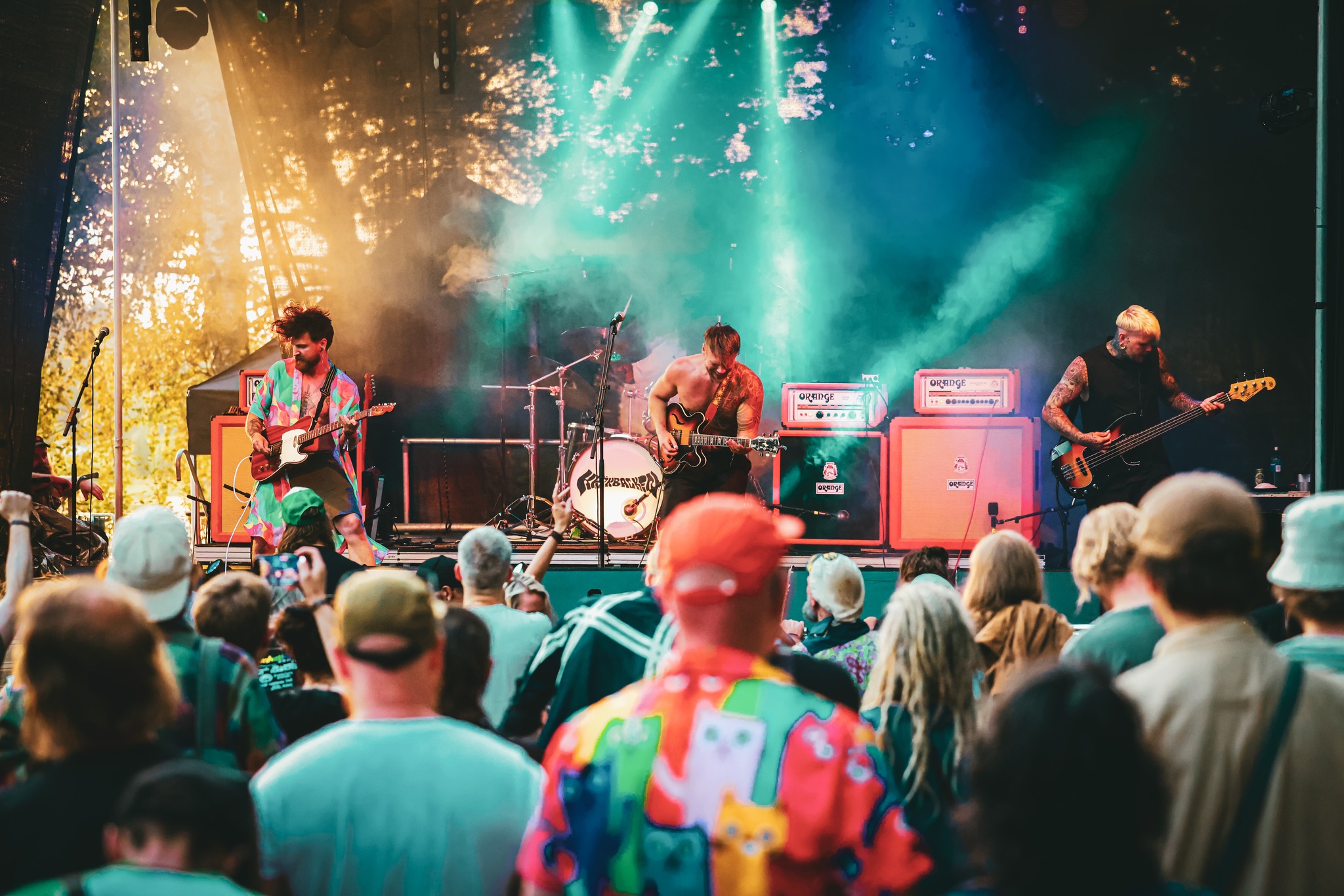
The psychedelic rock scene is a good example of this right now. Regional scenes in Colorado, Cincinnati, and Georgia are producing credible acts getting real press coverage not because they have better AI tools but because they're showing up in their communities. The Normaltown Festival circuit, CPR Colorado coverage, Cincinnati CityBeat, these are relationships built by humans being present in physical spaces. Tame Impala's 2026 album cycle is generating cross-genre buzz partly because Kevin Parker has spent years building a mythology that feels personal and real. You can't automate mythology. You can only automate the infrastructure that gives you enough time and energy to build it.
That's the actual argument for AI tools in 2026. Not that they make you a better artist. They don't. Not that they replace the hard parts of building a music career. They don't. The argument is that the operational burden of being an independent artist in 2026 is so absurdly heavy that without automation, most artists spend more time on career administration than on music. AI tools, the right ones, used correctly, give you back the hours. What you do with those hours is still entirely up to you.
The artists winning right now are not the ones with the most tools. They're the ones who automated the repetitive work, protected their creative time, built real relationships with real fans, and showed up in rooms. AI is the infrastructure. You're still the point.