- Tame Impala's Album Cycle Is a Freight Train You Can Draft Behind
- Superfan Culture Just Ate Passive Reach for Breakfast
- Streaming Still Owes You Money and Everyone Knows It
- Regional Scenes Are Winning and Major Markets Are Sleeping on It
- What This Week Is Actually Telling You
Tame Impala dropped a Jennie remix this week and the internet briefly forgot what genre it was listening to. That cross-genre moment, a psych rock institution bleeding into K-pop adjacency, tells you more about where independent music is heading in 2026 than any trend report you'll pay $200 to download. So let's start there.
Tame Impala's Album Cycle Is a Freight Train You Can Draft Behind
Kevin Parker confirmed the 2026 album is building. The Jennie remix is not a distraction, it's a signal flare. When Tame Impala activates, the entire psychedelic rock ecosystem wakes up. Playlist curators who haven't touched the genre in six months suddenly need content. Blogs that cover adjacent sounds start mining for comparable artists. Casual listeners who know one Tame Impala song go looking for more of whatever that feeling is.
This is a real promotional window. Not a theoretical one. The months before and after a Tame Impala release are historically when psychedelic rock playlists see their highest editorial activity. Djo's "The Crux" and Briston Maroney's "Better Than You" are already demonstrating that polished psychedelic indie with pop sensibility has mainstream appetite right now. These aren't cult releases. They're charting.
The problem for most indie psych artists is timing. They release when the track is done, not when the market is listening. And those two moments almost never overlap by accident. You have to engineer the overlap.
If you're sitting on a single that has any psychedelic texture at all, the window is the next four to eight weeks. Pitch it now. Not after the album drops. Before. Playlist curators are building queues in anticipation, and a well-timed pitch to an active curator in this genre right now lands in a much less crowded inbox than it will in September.
The Playlist Discovery and Pitch Engine we built at Indiependr.ai exists precisely for this kind of moment. It finds active curators in your specific genre, scores them by how recently they've updated their playlists and how often they actually respond to pitches, and manages the outreach so you're not manually emailing 40 people and tracking spreadsheets. Timing a pitch campaign to an industry wave is the move here. Spray-and-pray is not.
Also worth noting: the Jennie remix shows that genre walls are genuinely dissolving. Packaging's "Always Calling" getting Earmilk coverage as a lo-fi, journey-oriented release proves that the psychedelic umbrella is wide enough to shelter a lot of sounds right now. You don't have to sound like Currents-era Tame Impala to benefit from this cycle. You just have to be in the conversation.
Superfan Culture Just Ate Passive Reach for Breakfast
The industry forecast coming out of multiple sources this week is saying the same thing with different words: a small, deeply engaged audience is now worth more than a large, indifferent one. This is not a new idea. But the data backing it up in 2026 is harder to argue with than it was two years ago.
World-building rollouts are outperforming straightforward release announcements across the board. Mystery-driven campaigns, the ones where the artist reveals information slowly and treats the audience like they're solving something together, are generating compounding engagement that a single announcement post simply cannot match. IRL activations are resurging specifically because they create the kind of trust that an algorithm cannot manufacture or replicate.
Here's what this actually means in practice. If you announce your single with a square post and a streaming link, you are competing with every other artist doing the same thing on the same day for the same algorithmic slot. You will lose that competition most of the time. Not because your music is worse. Because you're playing by rules that were designed to favor artists who already have momentum.
The artists seeing compounding returns right now are treating their audience as collaborators. They're asking questions before they release. They're building lore. They're creating reasons for their existing fans to bring in new ones. A superfan who feels ownership over a release cycle will evangelize in ways that no ad spend can replicate.
The content volume required to sustain this kind of world-building is genuinely brutal for a solo artist or small band. I know this firsthand. BAUTASTOR has been in the middle of this problem for years. You need to be everywhere, consistently, while also actually making music. Those two things fight each other constantly. The reason we built Social Autopilot into Indiependr.ai was specifically so that the posting machine doesn't eat the creative machine. Sixty-eight scheduled social posts went out from artists on our platform this week. That's sixty-eight moments of visibility that didn't require sixty-eight interruptions to someone's recording session.
The superfan model also demands that you know who your superfans actually are. Not your follower count. Not your monthly listeners. The actual humans who buy, share, show up, and bring people. Most artists have no idea who those people are because they're buried inside platform analytics that were designed to sell you advertising, not to help you understand your audience.
Streaming Still Owes You Money and Everyone Knows It
Nothing structurally changed in streaming economics this week. That's the story. Spotify's per-stream rate for independent artists remains somewhere between $0.003 and $0.005. Apple Music pays slightly better. Tidal pays better still but has a fraction of the user base. The math doesn't work for anyone below a certain scale, and that scale is higher than most people admit publicly.
What did happen this week is that the conversation around sync licensing for indie artists got louder. Multiple pieces circulating in the psych rock space specifically are pointing at sync as the realistic revenue path for independent artists in this genre. And they're right. A single sync placement in a mid-tier TV show or a video game can generate more money than six months of streaming. The barrier is access and relationships, not quality. Indie psych artists are making music that is genuinely sync-ready. The problem is that most of them have no idea how to get in front of music supervisors.
But the underlying streaming problem is still there and it's still worth being angry about. The system was designed for scale that most independent artists will never reach. A million streams at $0.004 is $4,000. Before distribution fees. Before your split with bandmates. Before taxes. That's not a living. That's a nice month of side income if you're lucky.
The artists who are figuring this out are building direct revenue channels alongside streaming. Merch. Tickets. Direct fan support. The artists on our platform who are selling directly through Indiependr.ai keep 95% of every transaction. No platform taking 20-30%. No fan data disappearing into someone else's database. The math is completely different when you own the transaction.
Streaming is still worth doing. It's discovery infrastructure. But treating it as a revenue source rather than a discovery layer is where a lot of independent artists are still getting hurt.
Regional Scenes Are Winning and Major Markets Are Sleeping on It
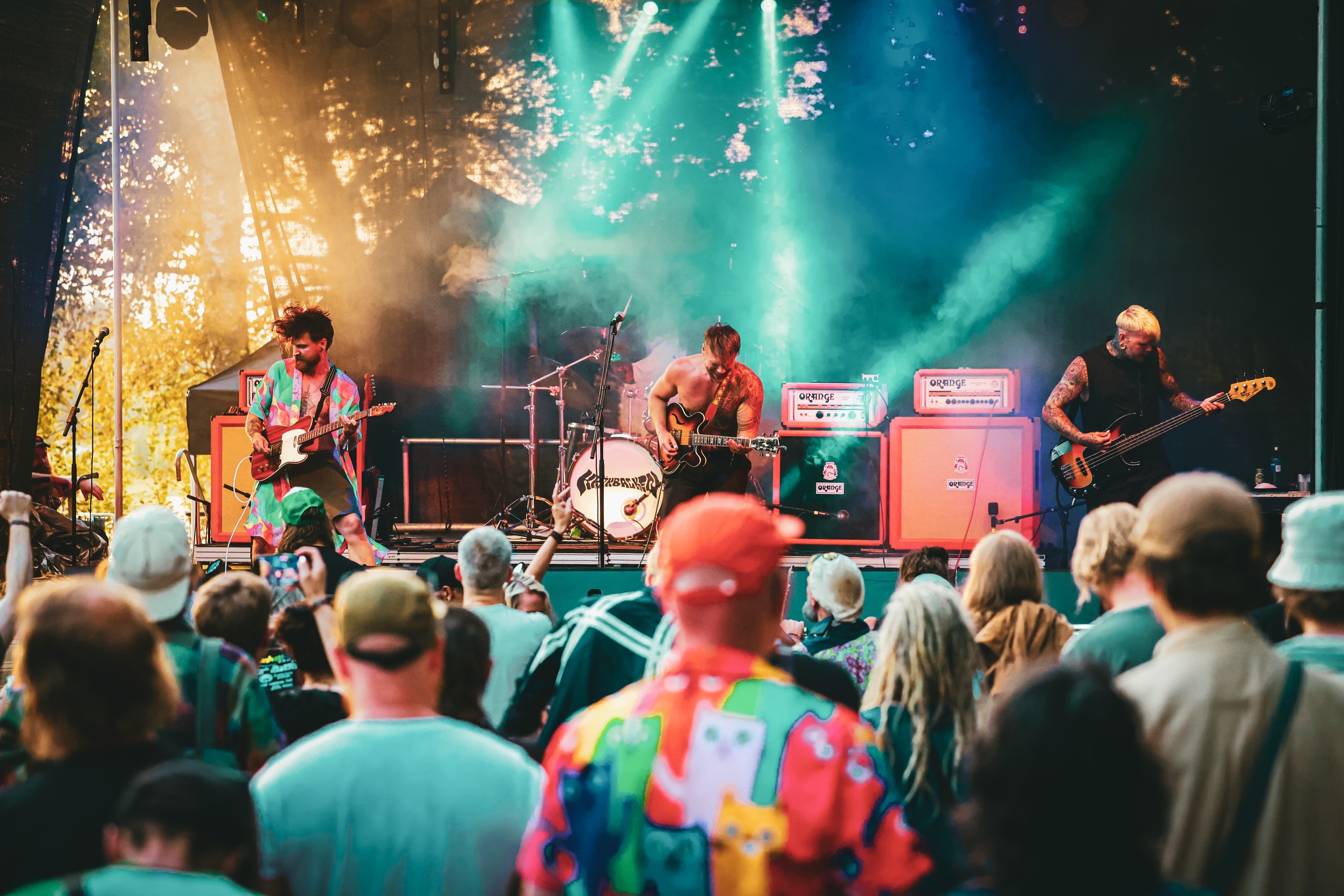
Colorado, Cincinnati, and Georgia's Normaltown Festival are all generating press coverage for credible independent psychedelic acts this week. CPR Colorado and Cincinnati CityBeat are actively covering the scene. These are not consolation prizes. These are real audiences with real purchasing power and real community infrastructure that major markets often lack.
There's a pattern here that keeps showing up in 2026. The artists building durable careers are not necessarily the ones breaking through in Los Angeles or New York first. They're the ones who become genuinely important in a specific regional ecosystem, then use that credibility as a launchpad. A packed room in Cincinnati means something. It means you have fans who drove somewhere, paid for a ticket, and stayed for the whole set. That's a different kind of proof than 50,000 monthly listeners on Spotify who've never seen you play.
The Normaltown Festival in Georgia specifically is worth watching. Regional psych festivals have historically been early signals for which artists are about to break wider. The booking decisions being made at these festivals right now reflect what A&R at mid-size labels will be paying attention to in six months.
For independent artists, the actionable version of this is simple: stop trying to go national before you've gone local. Build the regional story first. Get the regional press. Play the regional festivals. Then the national pitch has evidence behind it instead of just ambition.
The post-rock crossover and indie pop fusion happening within the psychedelic space right now is also expanding what regional audiences will accept under that umbrella. You don't have to be a purist. The listeners aren't.
What This Week Is Actually Telling You
Pull back and look at all of it together. Tame Impala activating, superfan culture accelerating, streaming economics stagnating, regional scenes producing real results. These stories are connected.
The industry is bifurcating more sharply than it was two years ago. On one side: artists who are waiting for algorithmic luck, releasing into the void, measuring success in streaming numbers, and burning out. On the other side: artists who are timing their moves to real market windows, building genuine community, monetizing directly, and treating their local scene as a foundation rather than a fallback.
The artists showing up in the news this week, the ones getting Earmilk coverage, the ones being booked at regional festivals, the ones whose releases are actually landing, are almost all in the second category. They're not smarter. They're not better musicians. They're operating with a clearer picture of how the current system actually works and building around its failures instead of hoping the failures don't apply to them.
We're tracking 71 Music Studio workflow runs on Indiependr.ai this week and 68 scheduled social posts. That's artists doing the work. Recording, finishing, releasing, posting. The platform is three artists right now, with seven more on the waitlist. Small numbers. But those artists are moving.
The psychedelic rock window is open. The superfan shift is real. The streaming math hasn't changed and probably won't. Regional credibility still converts. Those four things together are the picture this week, and they'll probably still be the picture next week, just with different names attached. The artists who act on the window rather than wait for a better one are the ones who'll have a story to tell when the cycle turns.
If you want to see what we've built to help with the parts that are actually solvable, the full feature set is here. And if you're on the waitlist, we're moving through it. You'll hear from us.