I've seen maybe 300 press kits in the last year. I can tell you exactly how many were good: seven. The rest got deleted within 30 seconds because they committed the same fatal mistake , they were designed to make the artist feel good, not to make a booker's job easier.
That's the entire game. Your electronic press kit isn't a portfolio. It's not your artistic statement. It's a sales tool built for one audience: the person who has 47 other emails to answer and needs to decide right now whether you're worth their stage time.
The 30-Second Rule
Talent buyers spend less time on your EPK than you spend choosing a sandwich. They're looking for three things in this order: proof you can draw, proof you won't embarrass them, proof you're professional enough to show up on time. Everything else is decoration.
Start with your bio. Not your origin story, not your influences, not the poetic description of your sound that took you three hours to write. Lead with numbers. "Headlined the Normaltown Music Festival to 800 people. Spotify monthly listeners up 340% since January. Currently touring the Southeast with 12 confirmed dates." See how that works? You just told them you have an audience, momentum, and you're not sitting at home waiting for the phone to ring.
Then , and only then , give them one paragraph about who you are. Make it specific. "Athens-based psychedelic rock trio blending Tame Impala's synth textures with the raw garage energy of Ty Segall" tells me something. "Genre-bending sonic explorers pushing the boundaries of sound" tells me you don't know what you're doing yet.
Photos That Actually Work
You need exactly three photos. High-res, professionally shot, and recent. Not iPhone shots from your cousin's birthday party.
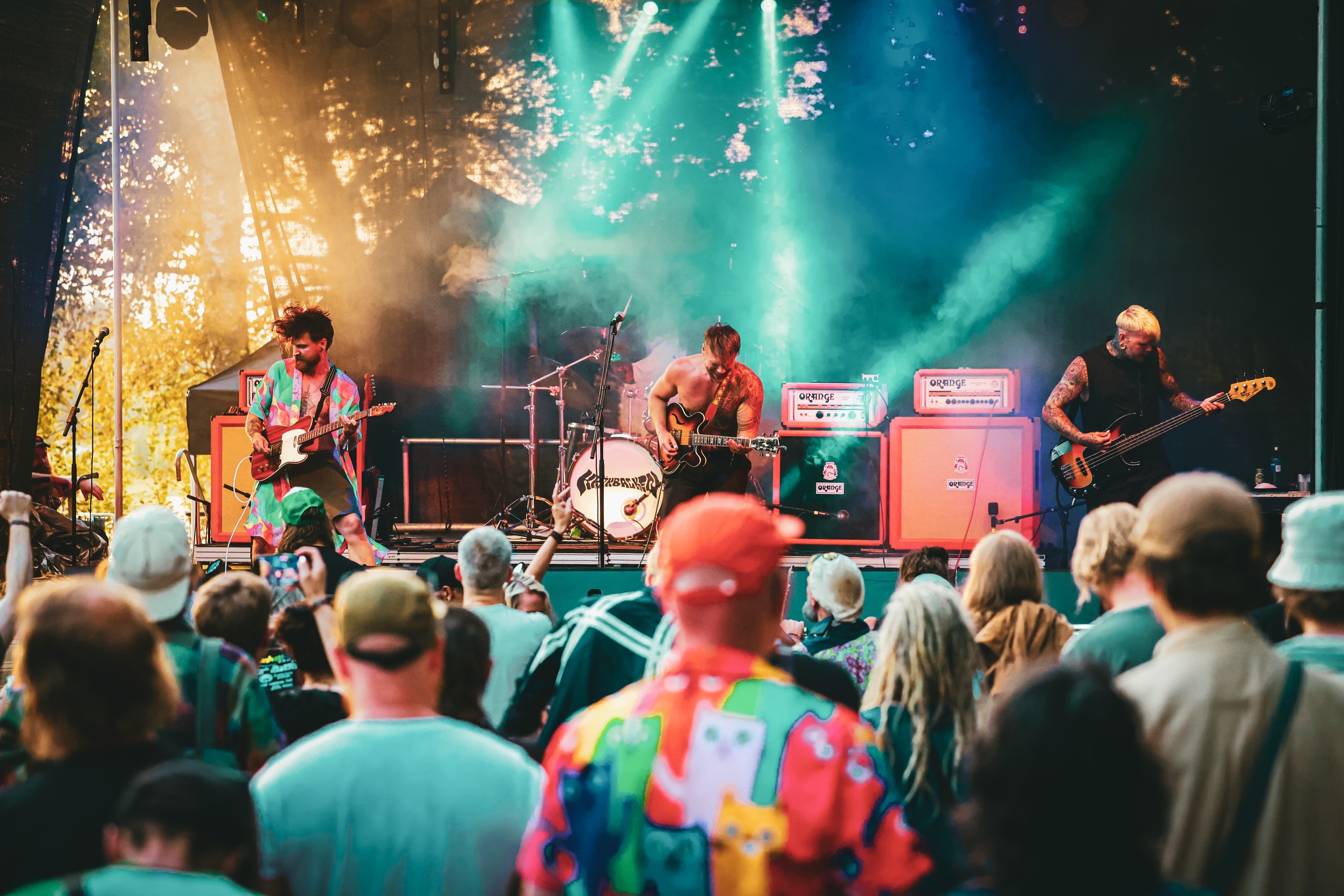
Photo one: full band, well-lit, in focus, showing your faces. This goes on the festival poster. Photo two: live performance shot showing actual humans in the audience. This proves you've played shows before and people showed up. Photo three: a moody promo shot that captures your vibe. This one can be artistic, but it still needs to be usable.
I don't care if you have 47 photos from that one really good shoot. Three photos, clearly labeled with your band name and photographer credit. Bookers don't have time to scroll through your entire Google Drive deciding which image best represents your essence.
Music: Less Is More
Three to five tracks, max. Your best song first , not the one you're most proud of, the one that hits hardest in the first 30 seconds. Then maybe your second-best song and one that shows range if you've got it.
Link to streaming platforms, but also embed players directly in the EPK. Half of bookers will listen right there without clicking away. Use private SoundCloud links or whatever, just make it playable without leaving the page.
And for the love of everything, don't make them download a zip file. That's an instant delete.
Press Quotes and Social Proof
This is where most DIY artists fall apart because they don't have any yet. Here's the workaround: use pull quotes from anywhere legitimate. A solid review from a college radio blog counts. A quote from a regional newspaper preview counts. A testimonial from a venue owner counts.
Format matters. Put the quote in actual quotation marks, attribute it properly, and link to the source. "Blistering live energy and hooks for days" , Athens Blur Magazine, February 2026. That's real. That's usable.
If you genuinely have nothing, skip this section entirely rather than making something up or using a quote from your mom's Facebook post. Bookers can smell fake press from a mile away.
The Tech Rider Nobody Reads (But You Still Need)
Your rider should be a single-page PDF. Stage plot, input list, basic requirements. If you're playing clubs that hold 200 people, your rider should not include requests for specific brands of bottled water and a bowl of only green M&Ms.
Be realistic about what you actually need versus what would be nice to have. "We require 4 vocal mics, 2 guitar inputs, bass DI, and basic drum micing" is professional. "We require a 32-channel digital console, wireless in-ear monitors for all members, and a dedicated monitor engineer" is why you're not getting booked at the local venue.
Separate your hospitality rider from your tech rider. Food and drink requests go in a different document that venues can ignore if they need to.
Contact Info That Actually Works
One email address. One phone number. Ideally these belong to the same person who checks them daily. If you have a booking agent, their info goes here. If you don't, your info goes here. Don't list four different band members' contact info and make the booker guess who to email.
Include your social media handles and website, but those are secondary. The email is what matters.
Platform Tools vs. DIY
You can build this yourself with a Google Doc and some Dropbox links, or you can use an actual EPK builder. Indiependr has a Music Studio workflow that handles most of this automatically , pulls your streaming stats, formats your bio, organizes your assets. It's not magic, but it saves you from having to design the thing from scratch.
The advantage of platform-built EPKs is they're standardized. Bookers see the same format from multiple artists, which means they know exactly where to look for the info they need. Your custom Wix site with the parallax scrolling and the embedded video header might look cool, but it's harder to navigate than a simple, clean template.
That said, the content matters more than the container. A great EPK in a Google Doc beats a terrible EPK on a fancy platform every single time.
What Actually Gets You Booked
Here's the thing nobody wants to hear: your EPK is table stakes. It gets you considered, but it doesn't get you booked. What gets you booked is momentum.
You're selling a story. The story is "this band is on the way up and you want to be part of that trajectory." Your EPK is just evidence for that story. Streaming numbers climbing month over month. Press coverage increasing. Social media engagement growing. Other venues booking you.
The psychedelic rock scene is heating up right now , Tame Impala comeback rumors, regional festivals like Normaltown actively booking emerging acts, playlists featuring new psych alongside established names. If you're in that lane, your EPK should reflect that you're part of a moment, not just another band with a demo.
Update your EPK every quarter. New photos, new stats, new press quotes, new tour dates. An EPK with a show listing from eight months ago tells the booker you're not actually active.
The Follow-Up
Send your EPK. Wait one week. Follow up once. If you don't hear back, move on. Bookers who are interested will respond. Bookers who aren't won't, no matter how many times you email them.
Personalize your pitch email. "Hey, I saw you booked [similar band] last month and thought we might be a good fit for your Thursday showcase series" works infinitely better than a mass email blast that starts with "Dear Venue."
And when you do get booked, deliver. Show up on time, be easy to work with, bring people. That's how you get invited back, and that's how you get recommended to other bookers. Your EPK gets you in the door once. Your actual performance gets you in the door everywhere else.
If you're building your press kit from scratch and want a system that pulls this all together without the manual formatting headache, Indiependr's Lab is worth checking out. But honestly, even a well-organized Google Doc beats a half-assed website. Just make it easy for bookers to say yes.