- The Algorithm Owns Your Show Now
- Dynamic Pricing and Who It Actually Helps
- Booking a Venue Is Still a Cold War
- Fan Data Is the Real Currency of Live Music
- IRL Is Back, But Not for the Reasons You Think
- What Actually Useful AI Looks Like for Indie Touring
The Algorithm Owns Your Show Now
Ticketmaster made $2.7 billion in revenue in 2023. Taylor Swift's Eras Tour sold out in minutes and then immediately reappeared on StubHub for four times the face value. And somewhere in between all that, a psychedelic rock band from Cincinnati was emailing a 200-cap venue for the third time, waiting to hear back, wondering if anyone was even reading their pitch.
That's the live music landscape in 2026. Two completely different industries wearing the same name. One is a data-driven, algorithmically-priced, corporately consolidated machine that has gotten very good at extracting money from fans. The other is still mostly running on cold emails, gut instinct, and the hope that someone at the venue actually likes your music.
AI is reshaping live music fast. But the honest answer to "is this good for independent artists" is: not yet. Not automatically. The tools exist. The data exists. The question is who controls it and who it actually serves. Right now, most of the AI innovation in live music is being built to help venues, promoters, and ticketing platforms squeeze more margin out of shows. The artist, especially the indie artist, is still mostly an afterthought.
That's the argument I want to make here. Not that AI is ruining live music, and not that it's saving it. But that the current wave of optimization is being applied almost entirely at the top of the industry, and the tools that could genuinely help working independent artists are either buried, inaccessible, or still being built.
Dynamic Pricing and Who It Actually Helps
Let's start with the thing everyone is talking about. Dynamic ticket pricing, also called demand-based pricing or surge pricing depending on how defensive the company's PR team is feeling, is now standard across major venues and festivals. Ticketmaster uses it. AXS uses it. Live Nation has been pushing it for years. The basic idea is that prices fluctuate in real time based on demand signals, the same way airline seats or Uber rides do.
For a stadium act, this probably makes financial sense. If 80,000 people want to see Kendrick Lamar and there are only 70,000 seats, prices will go up. That's supply and demand. Fine. But the way dynamic pricing has been rolled out, it's mostly just a mechanism to capture the resale market value upfront, cutting out scalpers while keeping the premium for the platform and, sometimes, the artist.
For indie artists, this conversation is almost entirely irrelevant. Dynamic pricing requires the kind of demand data that you only generate after years of touring and a significant fanbase. If you're playing a 300-cap room on a Tuesday in Denver, the algorithm has nothing to work with. You're not selling out. You're trying to fill the room.
And this is where the AI narrative around live music gets dishonest. The trade press covers dynamic pricing as if it's an industry-wide shift. It's not. It's a feature built for the top 1% of touring acts, dressed up as innovation. The other 99% of working musicians are still trying to figure out how to sell 150 tickets to people who already like them.
The real pricing problem for indie artists isn't optimizing for surge demand. It's figuring out what to charge at all, how to run early-bird and fan-club tiers without a dedicated ticketing team, and how to keep enough of the revenue to actually make touring financially viable. Platforms like Ticketmaster take 25-30% in fees on top of the face value. That's before the venue takes its cut. Before travel. Before gear rental. The math on indie touring is brutal, and no amount of AI-driven surge pricing is going to fix it.
Booking a Venue Is Still a Cold War
I've cold-emailed venues. Most musicians have. You find a contact form, or a booking@ address if you're lucky, and you send something that you hope sounds professional but not desperate. Then you wait. Sometimes you hear back in two weeks. Sometimes you hear back never. Sometimes you get a reply asking for a press kit that links to a SoundCloud page you haven't updated since 2021.
This process has not changed meaningfully in twenty years. Venue booking is still almost entirely relationship-driven, which sounds nice until you realize that if you don't already have the relationships, you're starting from zero every single time you try to book a new market.
AI should be able to fix this. The information exists. Venue capacities, booking contact details, genre preferences, typical door deals, which venues are actively booking new acts versus coasting on their existing relationships. None of this is secret. It's just scattered across a hundred different websites, Facebook pages, and booking agency databases that nobody has bothered to aggregate and make useful for the artists who need it most.
This is exactly why we built the Tour Booker feature into Indiependr. The AI finds venues that match your genre and your draw size, researches them properly, and sends personalized booking requests. Not a templated blast. Actual outreach that references the venue's booking history and makes a case for why you specifically belong on their stage. It handles routing, estimates travel costs between dates, and tracks confirmations. The goal is to make the cold-email process feel less like shouting into a void and more like having an agent who works while you're in the studio.
The broader point is that booking inefficiency costs indie artists real money and real time. A band that books ten shows a year instead of twenty-five, just because the outreach process is too painful to scale, is leaving revenue and audience-building on the table. AI doesn't solve the music. But it can absolutely solve the logistics.
Fan Data Is the Real Currency of Live Music
Here's something the major labels and Live Nation understand that most indie artists don't: the show isn't the product. The fan relationship is the product. The show is just the moment where you convert a passive listener into someone who will buy a ticket, a shirt, and tell three friends about you. The data you collect from that interaction, who showed up, where they came from, what they bought, whether they came back, is worth more than the door split.
Ticketmaster knows this. That's a significant part of why they're so hard to dislodge. They don't just process tickets. They own the fan data. When you sell tickets through their platform, they know who your fans are. You don't. They can retarget those fans for the next show. You can't. They can sell that data to promoters and brands. You can't. The entire infrastructure of major live music is built on this asymmetry, and most indie artists don't even realize they're giving it away.
AI-driven fan targeting, the kind that major promoters use to identify high-value ticket buyers and reach them with personalized ads, is genuinely powerful. But it only works if you have the data to begin with. If you're selling tickets through a third-party platform that keeps the fan data, you're building their business, not yours.
The answer is direct ticketing. Sell tickets yourself, keep the fan data, and use it to understand who's actually showing up. Not just follower counts, but real engagement signals: who bought early, who bought merch at the same time, who came to two shows in the same year. That's your superfan list. That's the audience you build the next tour around. The Fan Intelligence dashboard on our platform is built specifically for this, because the industry data problem isn't that the data doesn't exist, it's that it's been locked up by platforms that have no incentive to share it with you.
IRL Is Back, But Not for the Reasons You Think
There's a real resurgence happening in live music right now, and it's not just post-pandemic bounce-back. It's something more specific. Audiences are craving experiences that feel unmediated. Not a livestream, not a TikTok recap, not a carefully produced YouTube concert film. An actual room with actual sound and actual people who all showed up because they care about the same thing.
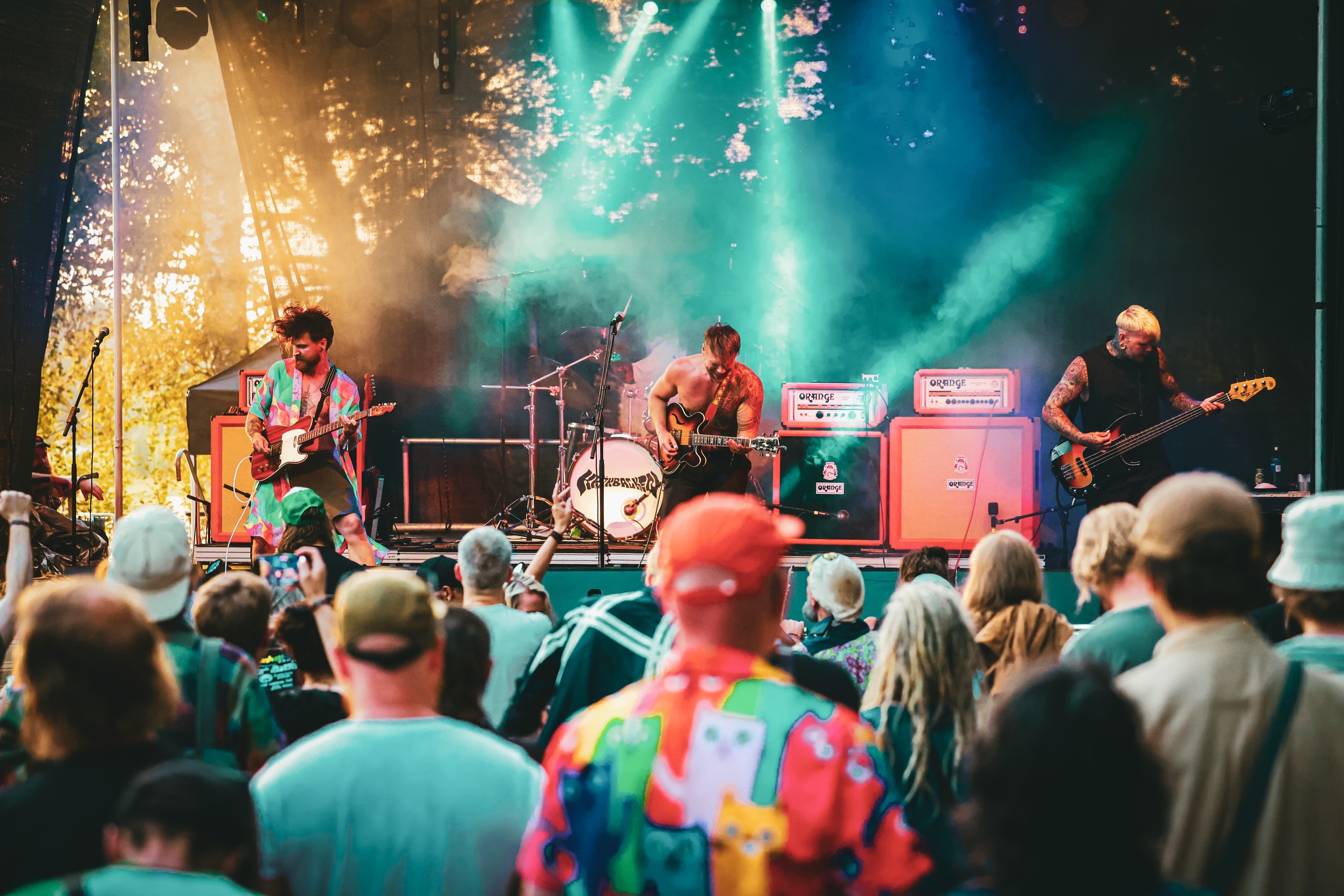
This tracks with what we're seeing in the psychedelic rock segment specifically. Packaging's "Always Calling" getting Earmilk coverage without major label backing, regional scenes in Colorado and Cincinnati producing acts that are earning real press, the Normaltown Festival circuit in Georgia giving local acts a genuine platform. These aren't flukes. They're signals that audiences are actively seeking out smaller, more authentic experiences, and that the algorithm is not the only path to finding your people.
The industry forecast right now points hard toward superfan culture. A small, deeply engaged audience driving more momentum than broad passive reach. IRL activations as a trust-building mechanism that no algorithm can replicate. This is not a new idea, but it's newly urgent. Because streaming has compressed recorded music into a commodity, the live show has become the place where the artist-fan relationship actually forms. It's the one thing that can't be Spotified.
AI can support this, but it can't replace it. What AI can do is make sure the right people know the show is happening, in the right city, at the right time, with enough lead time to actually plan around it. It can handle the logistics so the artist can focus on making the show worth attending. It can analyze which markets have the most engaged listeners before you even book the tour, so you're not flying blind into cities where nobody knows your name.
What AI cannot do is create the moment. That's still entirely on you.
What Actually Useful AI Looks Like for Indie Touring
So what does AI actually look like when it's working for indie artists instead of against them? It's not dynamic pricing algorithms. It's not facial recognition at stadium gates. It's much more unglamorous than that, and much more useful.
It looks like knowing which markets to target before you book. If your streaming data shows significant listener clusters in Asheville, Portland, and Austin, you have a data-driven case for routing a tour through those cities. That's not complicated analysis. It's just connecting the dots between where your music is being heard and where you should be showing up. Most artists don't do this because the data is scattered across Spotify for Artists, Apple Music Analytics, and whatever social platform they happen to check that week.
It looks like outreach that actually gets responses. Venue bookers get hundreds of generic pitches. The ones that get responses are specific, demonstrate genuine knowledge of the venue's programming, and make a clear case for why the audience fit works. AI can research that context and personalize at scale. That's not cheating. That's just not wasting a booker's time with something that clearly wasn't written for them.
It looks like keeping your ticket revenue. A 5% platform fee versus 25-30% is not a small difference when you're trying to make touring financially viable. Selling direct, keeping the fan data, and building a list of people who actually showed up is the foundation of every sustainable indie touring career. The artists who figure this out early compound their advantage over every release cycle.
And it looks like spending less time on the business so you can spend more time on the music. That's the actual promise of AI for independent artists. Not that the AI makes the art. But that it handles enough of the infrastructure that you don't have to choose between writing songs and running a small business. That's the whole reason Indiependr exists. Because the tools that serve artists should actually serve artists, not extract from them.
Live music is not going to be replaced by AI. But the logistics around it, the booking, the routing, the fan targeting, the ticketing infrastructure, are absolutely going to be reshaped. The artists who benefit from that reshaping will be the ones who understand what the tools are actually doing and who they're actually serving. Not every AI feature in live music is built for you. Most of it isn't. But some of it is, and knowing the difference is the whole game right now.