BTS came back this week. Four years of solo projects, military service, and collective breath-holding, and now there's new music and a Netflix concert special landing in front of a global audience that never actually stopped caring. That's the story that cuts through everything else this week, and not just because of the cultural spectacle of it. The real reason it matters is what it signals about where attention and streaming volume are about to flow.
The BTS Return Is a Streaming Event, Not Just a Pop Moment
When an act with BTS's footprint drops new material, the ripple effects hit markets most Western artists completely ignore. South Korea, Japan, Thailand, Indonesia , these aren't niche audiences anymore. They're some of the most engaged music streaming populations on the planet, and a BTS comeback creates a gravitational pull that lifts the entire K-pop and K-pop-adjacent ecosystem. Spotify editorial playlists in those markets will be in motion. Discovery algorithms will be recalibrating around what listeners engage with alongside the new BTS content.
For indie artists, especially anyone working in atmospheric, emotionally layered, or genre-fluid spaces, this is actually an opportunity. Not to chase K-pop aesthetics, but to pitch into those markets right now while editorial teams are actively curating around a surge in listener activity. The window to get a Spotify pitch in front of Southeast Asian editorial is probably the next three to four weeks. After that, the algorithm settles back into its baseline and you're fighting the usual noise again.
The Netflix special is its own thing entirely. Live concert films as streaming content have been quietly building a case for themselves as a discovery format, and BTS doing one at this scale will push that format further into legitimacy. Watch for more mid-tier touring artists to start treating live recordings as streaming assets rather than just merch table DVDs.
Visa Restrictions Are Quietly Wrecking Festival Lineups
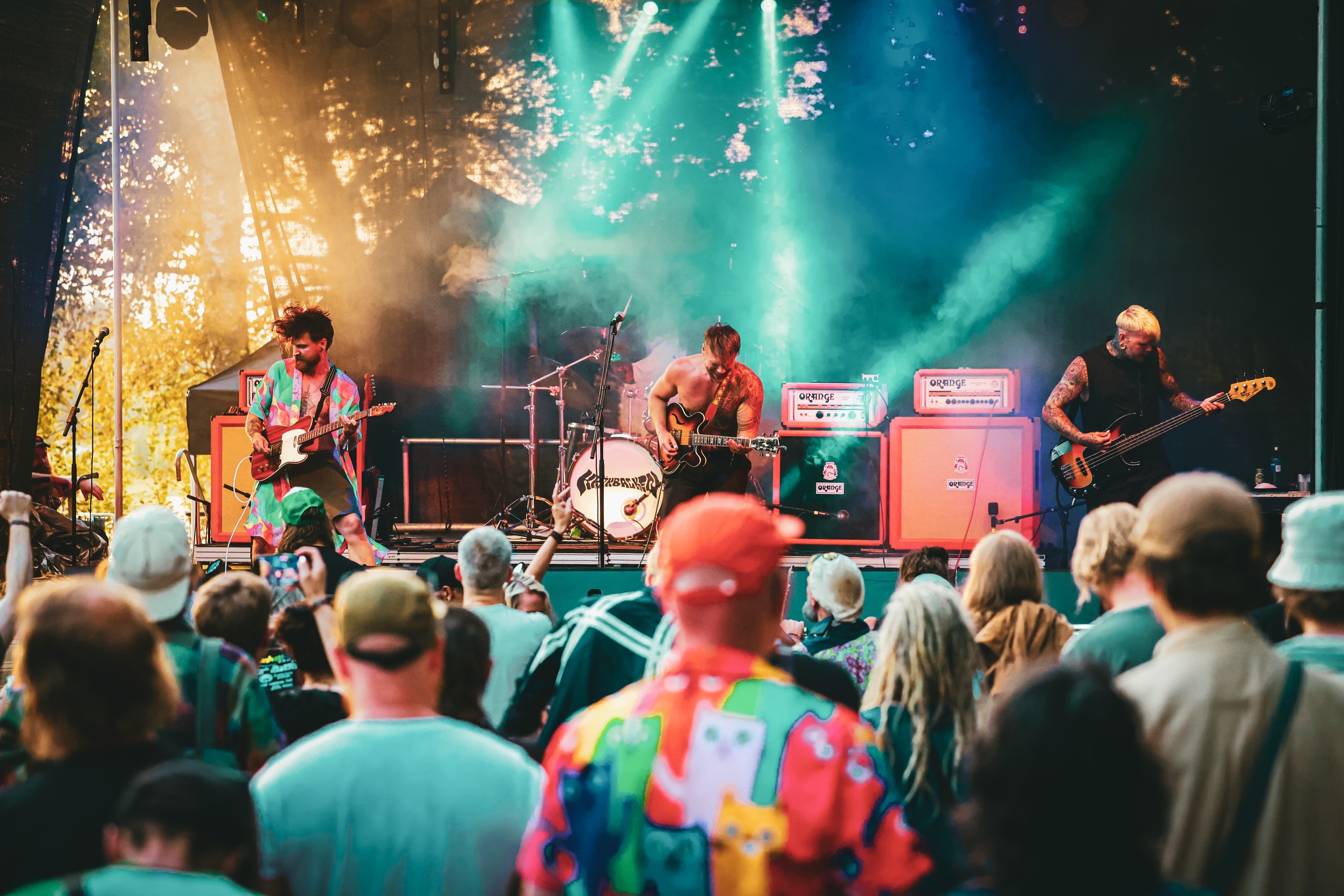
Green River Festival came out and said it directly this week: booking international acts is getting harder because of travel and visa complications. That's a polite way of describing what is genuinely a logistical nightmare for festival programmers right now. And Green River isn't alone. This is a widespread issue that most festivals are either quietly absorbing or papering over with domestic bookings.
The consequence for indie artists is actually a mixed bag. On one hand, more slots are opening up at festivals that previously leaned heavily on international headliners. If you're a domestic act with a solid live show and a regional following, you're more bookable right now than you were two years ago, full stop. Festival programmers are actively looking for reliable domestic talent to fill gaps.
On the other hand, if you're an international artist trying to build a U.S. presence, the path through live touring just got significantly more expensive and uncertain. Which brings us back to the BTS point: streaming and social content are doing the job that touring used to do for international audience-building. You can't always get on the plane. You can always drop a track.
The deeper story here is that the festival ecosystem is quietly restructuring around a new reality, and the artists who adapt fastest, building strong regional live presences while simultaneously treating digital content as their international touring arm, are going to come out of this period in a genuinely strong position.
Album Release Parties Are Back, and They Actually Work
Lana Carlson's REDEMPTION release party got attention this week as an example of what direct fan engagement looks like when it's done with intention. And it's worth pausing on that because there's been a persistent assumption in some corners of the indie world that IRL events are a legacy tactic, something you do if you can't crack the algorithm.
That assumption is wrong, and the data is catching up to it. Superfan culture, the idea that a small deeply engaged audience drives more real momentum than a large passive one, is accelerating right now. A release party with 80 people who are genuinely invested in your work generates more compounding value than a Reels post that hits 40,000 indifferent scrollers. The 80 people tell their friends. They stream the album on repeat. They show up to the next show. The 40,000 move on in four seconds.
This connects directly to what the industry forecast is pointing at for the next several weeks: world-building and mystery-driven rollouts are outperforming straightforward release announcements. An album release party isn't just a party. It's a piece of lore. It's an event that your core audience was present for and will reference. The Lab at Indiependr has been tracking exactly this pattern, and the artists leaning into experience over announcement are seeing it pay off in ways that are hard to fake with a content calendar.
New Music Volume Is High and Playlist Placement Is a Fight
Indie, folk, bluegrass, alternative , consistent weekly releases across all of them. The volume of new music hitting streaming platforms right now is not slowing down. Which means playlist placement is increasingly the difference between a release that builds and one that disappears into the archive after two weeks.
Niche music blogs and public radio are still punching above their weight as discovery channels, and that's worth remembering when you're allocating your promotional energy. A placement on a well-curated indie blog with a loyal readership can outperform a mid-tier playlist add in terms of actual listener conversion. These aren't glamorous wins, but they're real ones.
The pitch cycle matters more than ever. If you're releasing something in the next month and you haven't already submitted to Spotify editorial through SubmitHub or directly through Spotify for Artists, you're already behind. The editorial pitch window closes well before release day, and algorithmic playlists like Discover Weekly and Release Radar are still the most scalable discovery tools most indie artists have access to. Use them deliberately, not as an afterthought.
Here at Indiependr, we've been watching artists use the Music Studio workflow to push through 59 runs this week alone, which tells you something about the pace people are working at right now. Thirteen scheduled social posts across active accounts. The grind is real. The artists treating their release cycle like a system rather than a series of one-off tasks are the ones staying visible in a crowded week.
The through-line in all of this, BTS, festival disruption, release parties, playlist competition, is that the artists who are building something coherent, a world, a community, a reason for people to pay attention beyond the single, are the ones who are going to matter when the dust settles. Everything else is just chasing the algorithm and hoping it's in a good mood.
If this kind of thinking is how you want to approach your next release cycle, Indiependr is where we're building the tools to back it up.